
Can an old spoon be beautiful?
Can an old spoon be beautiful?
Why do we admire age in old buildings, wooden tables and Japanese tea bowls, then panic when it appears on our own faces?
While preparing for Japan, I came across four ideas about beauty that made me look differently at time, imperfection and the evidence that we have lived.
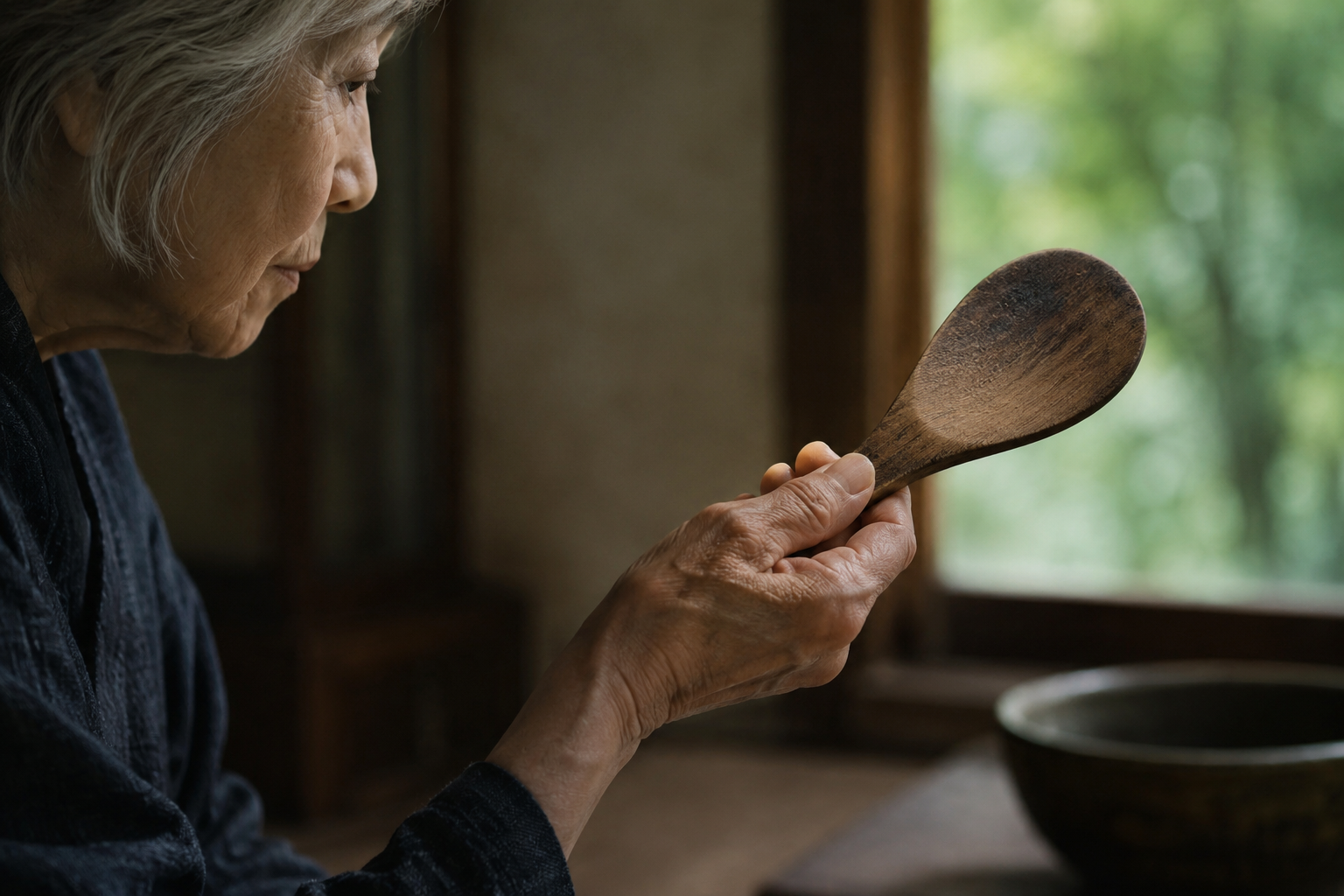
Recently, I looked at the long scar across my abdomen and thought, not for the first time, that after a year it ought to be fading faster.
Time, I felt, had had quite enough time to do its work.
Perhaps this is why, while preparing for our trip to Japan in October, I became interested in several Japanese ideas about beauty.
They seemed to approach time rather differently. Not as something to defeat, disguise or negotiate with under very bright bathroom lighting, but as something that changes the nature of what it touches.
The words do not have tidy English equivalents. They are not rules, and they certainly do not explain all Japanese ideas about beauty. But they offered me four different ways of looking.
The first was wabi.
Wabi is often associated with simplicity. Its older meanings were less comforting: loneliness, hardship and poverty. Through poetry and the culture of tea, however, it gradually came to suggest something more affirmative: a modest life, a chosen simplicity, a freedom from too much.
A rice spoon. A bamboo basket. A clay cup. Something useful that does not shout, “Look at me. I am meaningful.”
A rare quality these days.
Wabi connects beauty with ordinary life. It suggests that beauty does not live only in museums, cathedrals or expensive hotels.
It may also live in a spoon.
Then there is sabi, the beauty that comes through age.
Darkened wood. Moss on stone. Worn edges. Faded surfaces. The marks left by hands and weather.
The word once carried a sense of desolation, but later came to include the idea of something that has aged well and acquired a beautiful patina.
Time leaves colour, texture, memory and evidence.
This is where the subject becomes slightly inconvenient.
It is easy to admire patina on a wooden table and rather harder to admire it on one’s own face. Wrinkles on old Italian buildings appear poetic. On us, they somehow require serum.
Can an old spoon be beautiful? Easily.
Can an old face?
We become suddenly more demanding.
Why do we call age beautiful in objects, but damage in ourselves?
Sabi suggests that age is not automatically damage. Sometimes it is depth.
Wood darkens. Metal gathers patina. Clay changes through use. Gardens grow moss. People collect wrinkles, memories, wisdom, losses, scars and a certain authority that is unavailable at twenty-seven.
Over time, the meanings of wabi and sabi began to overlap and are now commonly joined as wabi-sabi.
Wabi brought simplicity. Sabi brought time.
Together, they point towards the beauty of the imperfect, the impermanent and the incomplete.
A Japanese tea bowl is not beautiful simply because it is imperfect. Plenty of imperfect things are merely badly made.
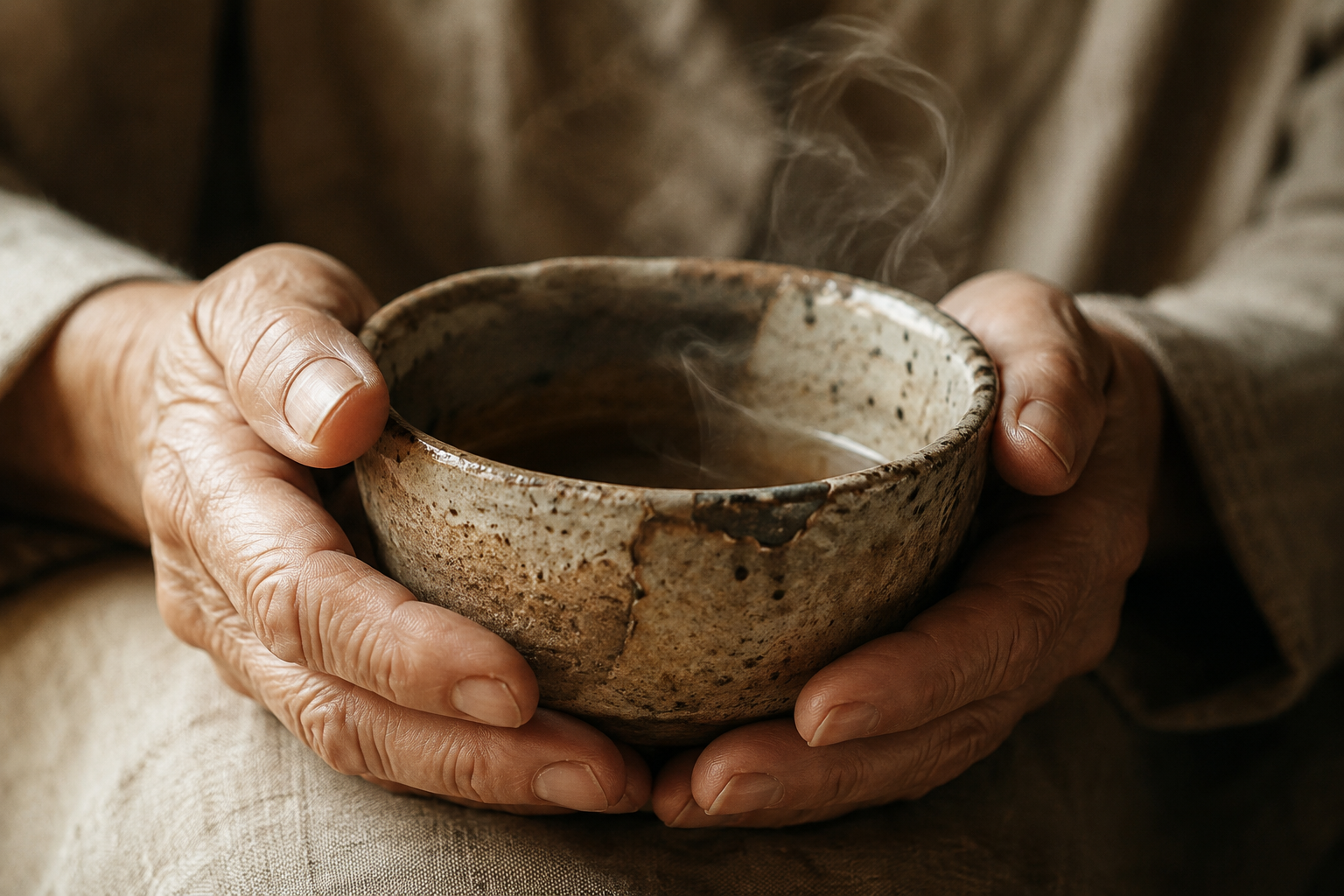
It becomes beautiful when its irregularity, material, purpose and history belong together. An uneven surface reveals the clay rather than concealing it. Its shape responds to the hands that hold it. Its beauty includes its weight, its warmth and the feeling of drinking from it.
Wood remains wood. Clay remains clay. Stone remains stone.
And I began to wonder how much of life we spend trying to become more impressive than our original material.
How much energy do we use trying to look younger or more successful?
How much effort goes into removing the evidence that we have lived?
I am not yet ready to call my scar beautiful. But perhaps it is not only damage. It is also evidence of illness, repair, survival and time.
Wabi-sabi does not answer these questions. It simply makes them harder to avoid.
Another word I came across was shibui.
Shibui is the beauty of things that reveal themselves slowly.
A cup that feels a little better in your hand each morning. A room that does not impress you immediately but somehow makes you breathe more easily. A face that becomes more interesting when you stop demanding that it look younger.
This kind of beauty does not perform for attention.
It waits to be noticed.
Finally, there is yūgen.
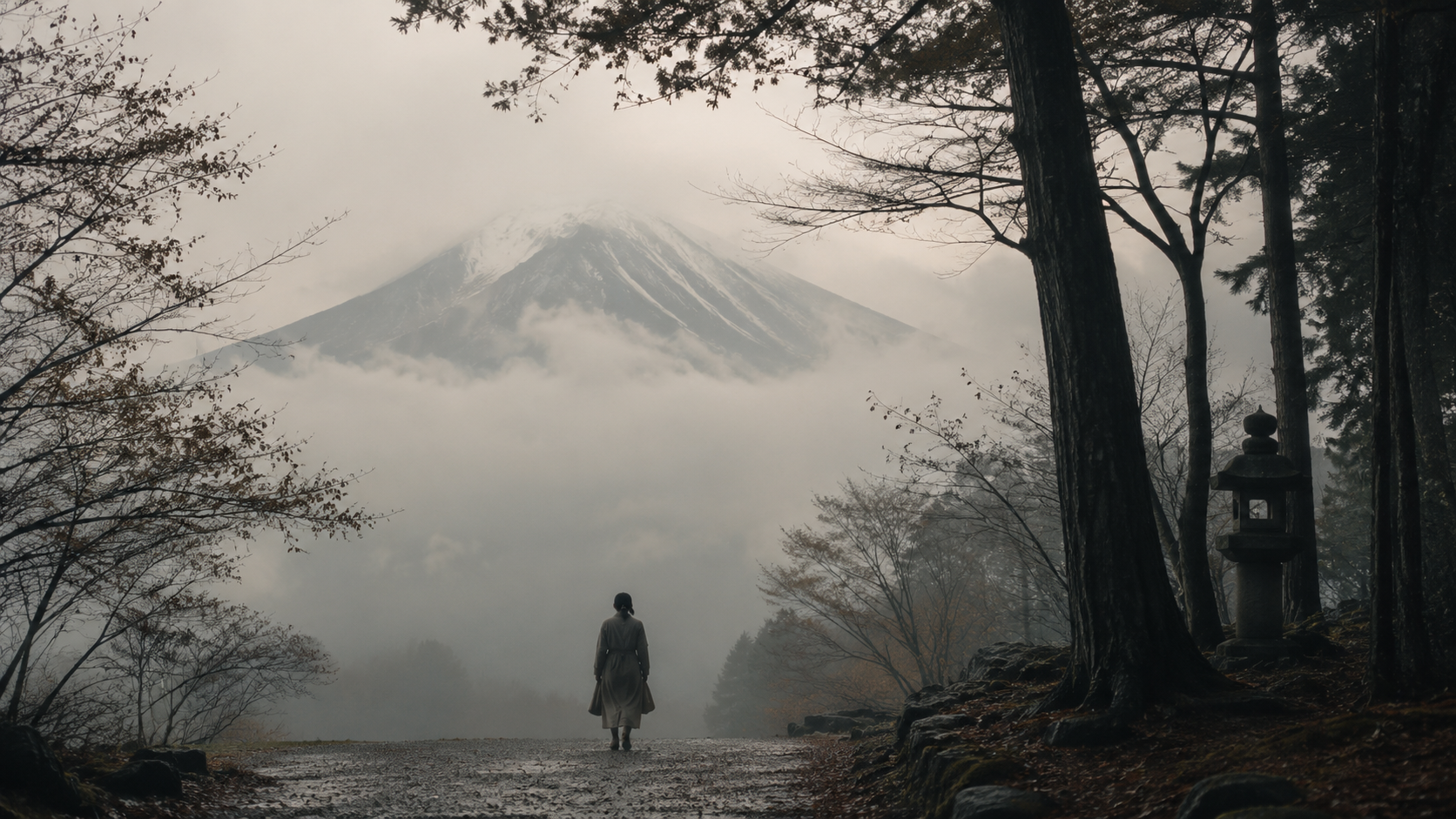
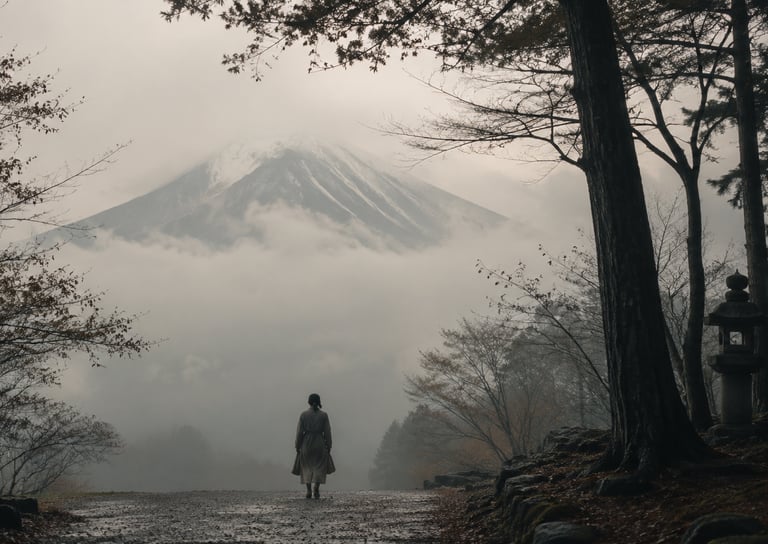
Yūgen is sometimes translated as mysterious grace. It became important in Japanese poetry and Noh theatre, where a pause, a movement or something only partly revealed may carry more meaning than an explanation.
A mountain in mist. The moon partly hidden by clouds. A boat disappearing behind an island.
Not mystery as a puzzle to be solved, but the feeling that something exceeds our ability to describe it.
Love. Loss. Age. Beauty. A child leaving home. A scar. A song from long ago. The strange fact that we are still here.
Perhaps we explain too much now.
Yūgen leaves something open.
That is why these ideas touch me.
They do not ask beauty to be young, perfect or easy. They ask us to look more carefully at things, at nature, at time and at ourselves.
In October, when I arrive in Japan, I want to practise this kind of looking.
Not only at temples, gardens and tea bowls, but also at my own face, my scars and my life.
Not as a project I need to fix or finish. But as material shaped by time.
Still imperfect.
Still changing.
Still here.
More from Worlds Within
Worlds Within
Beautiful. Unfinished. You.
Write to me:
© 2026 Worlds Within. All rights reserved.