
So much information. So little direction.
So much information. So little direction.
The Stoics did not have planning apps. Somehow, they still understood the modern mind.
I was sitting at my desk, surrounded by tools designed to make me feel in control. AI summaries. Planning apps. Lists. Reminders. Enough systems to organise a small empire.
And still, I felt lost. Not tragically lost. Modern lost. Too many options. Too many tabs. Too many helpful tools helping me into complete confusion.
I have written before about being captured by optimisation in The Last Squat, so apparently this is not a new illness.
So much information. So little direction.
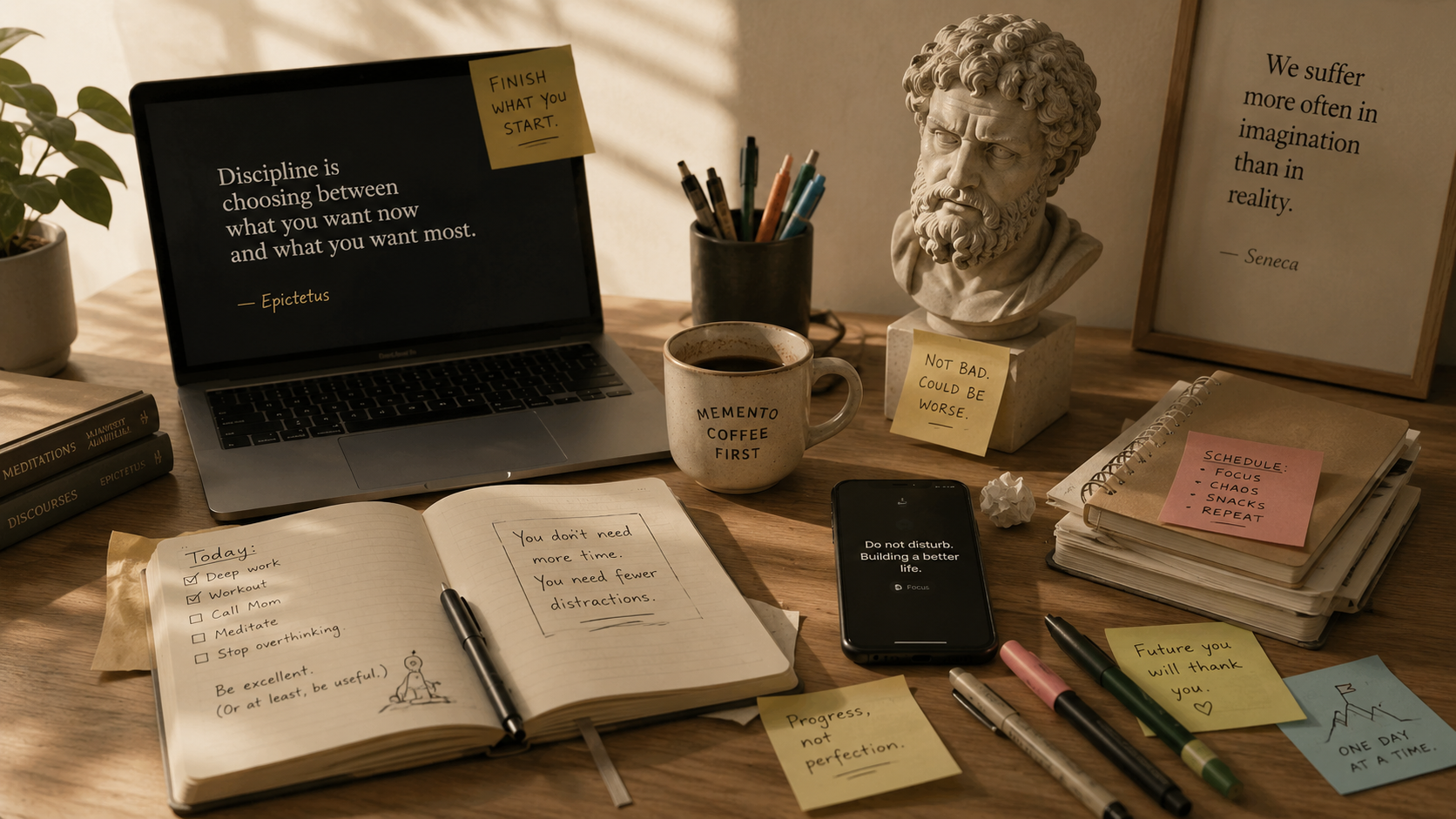
At this point, I needed someone old. Preferably dead.
The Stoics seemed qualified.
In my work, I meet clever, capable people who have tried everything. Productivity methods. Self-help books. New routines. Better calendars. Possibly even better pens.
And still, many say the same thing:
I don’t know what I want anymore.
I’m busy, but I don’t feel moved.
I’m doing well, but I don’t feel well.
I know the feeling.
It is not always a crisis. Sometimes it is just too much future and not enough ground.
That is why I returned to the Stoics. Not because they had all the answers. More because they asked fewer, better questions.
The old men had a point
The future is new. We are not.
The Stoics didn’t have AI, planning apps, or polite little notifications telling them to drink water. Lucky them.
But they knew the basics. People worry. People want control. People imagine disasters before breakfast.
Different century. Same nervous system.
They were not trying to solve the future. They were trying to help us stay decent, steady, and slightly less dramatic while it happens.


Epictetus: some things are yours
Most of our energy goes into things that were never ours to manage. Other people’s moods. Other people’s choices. Outcomes. Timing. The future.
Epictetus had a point:
Some things are yours.
Some things are not.
Your thoughts. Your words. Your actions. Yours.
Other people. Outcomes. Timing. Not yours.
A rude little truth. But useful.
When I remember it, I feel a little less responsible for everything. And frankly, that is already progress.
Marcus Aurelius: stay human
Marcus ruled an empire in crisis. I sometimes struggle to answer three emails without becoming a worse person. So I respect the man.
His advice was embarrassingly simple:
Do not let chaos make you cruel.
Do not let responsibility take your compassion.
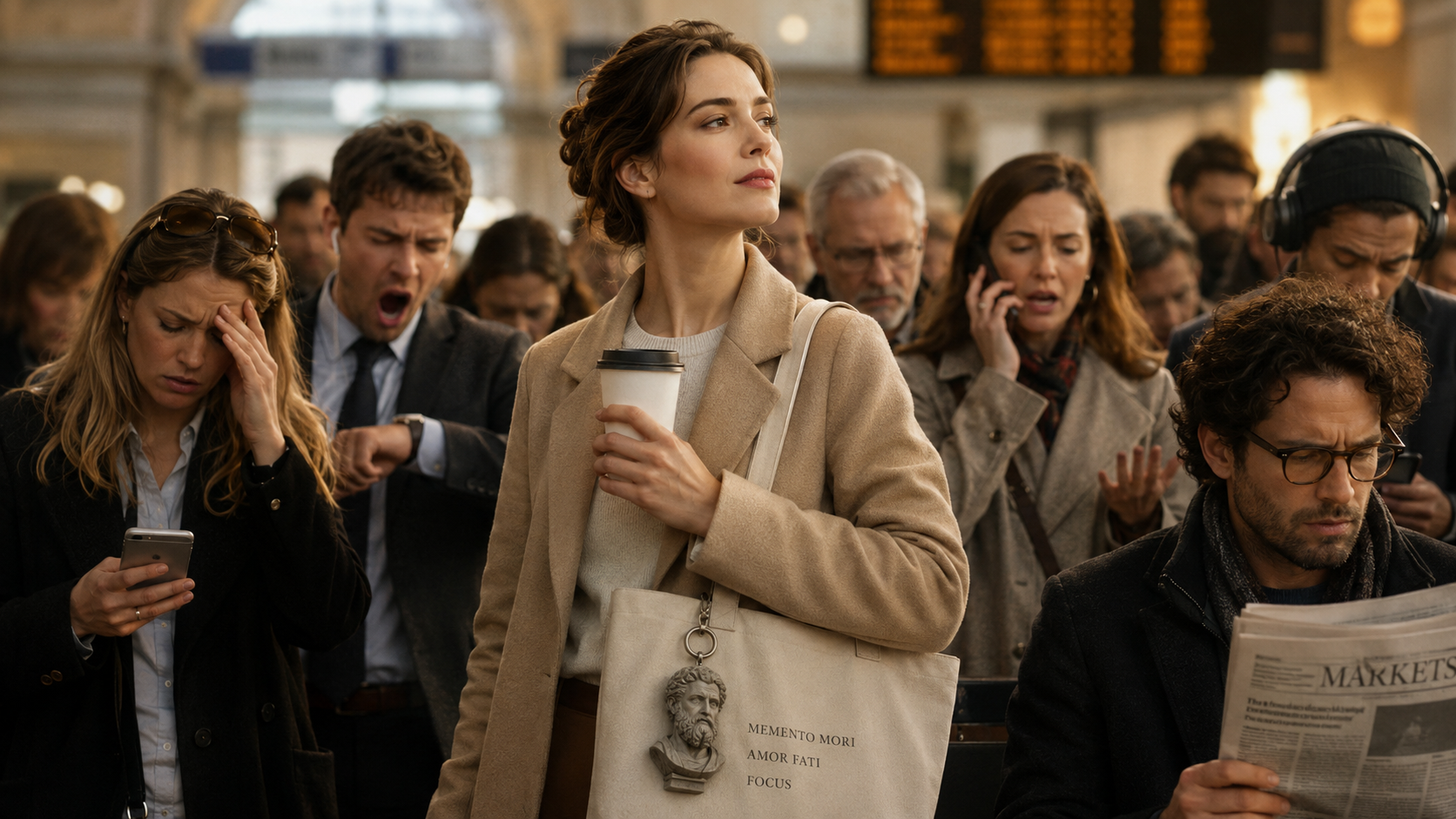
When the phone buzzes. When someone is irritating. When plans change.
Staying true to your values sounds noble. In practice, it often means taking one breath before sending the sharp reply.
A small victory. But still a victory.

Seneca: stop rehearsing disaster
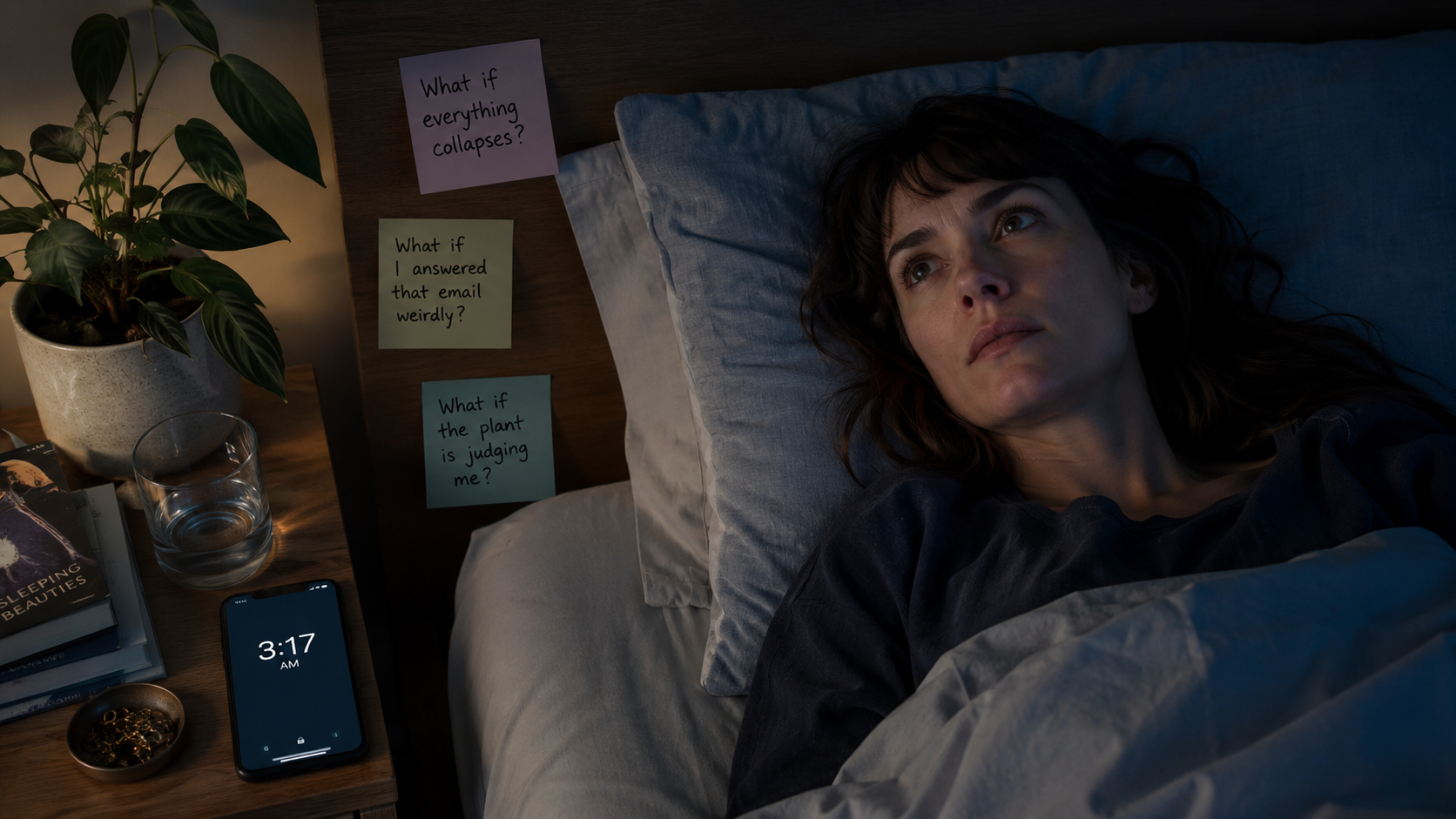
Seneca noticed something very inconvenient about the human mind: We suffer in advance.
We spend our lives twice: once in fear, once in reality. We imagine the conversation. The mistake. The rejection. The medical result. The email. Most of it never happens. And if it does, we still only get to suffer through it once. Which seems fair, doesn't it?
Seneca’s advice was not “stop caring.” It was more practical than that: Do not let imagined tomorrows steal today.

A small practice for modern minds
Knowing this is one thing. Remembering it when the phone is buzzing, the calendar is full, and your brain has started producing disaster scenarios - that is another.
So I try to end the day with three questions:
What was actually mine to handle today?
Where did I try to control something that was never mine?
What deserves my attention tomorrow?
The Stoics did not have planning apps. Lucky them. But they did leave us something better. A reminder that a life is not built by controlling everything. It is built by choosing what is yours - and letting the rest be slightly less your problem.
More from Worlds Within
Worlds Within
Beautiful. Unfinished. You.
Write to me:
© 2026 Worlds Within. All rights reserved.