The Last Squat
The Last Squat
I escaped a Russian spy, my father, and corporate ambition. Only to be captured by a fitness watch. For years, I believed in doing better than my best. Now I’m learning something harder: how to stop without guilt.
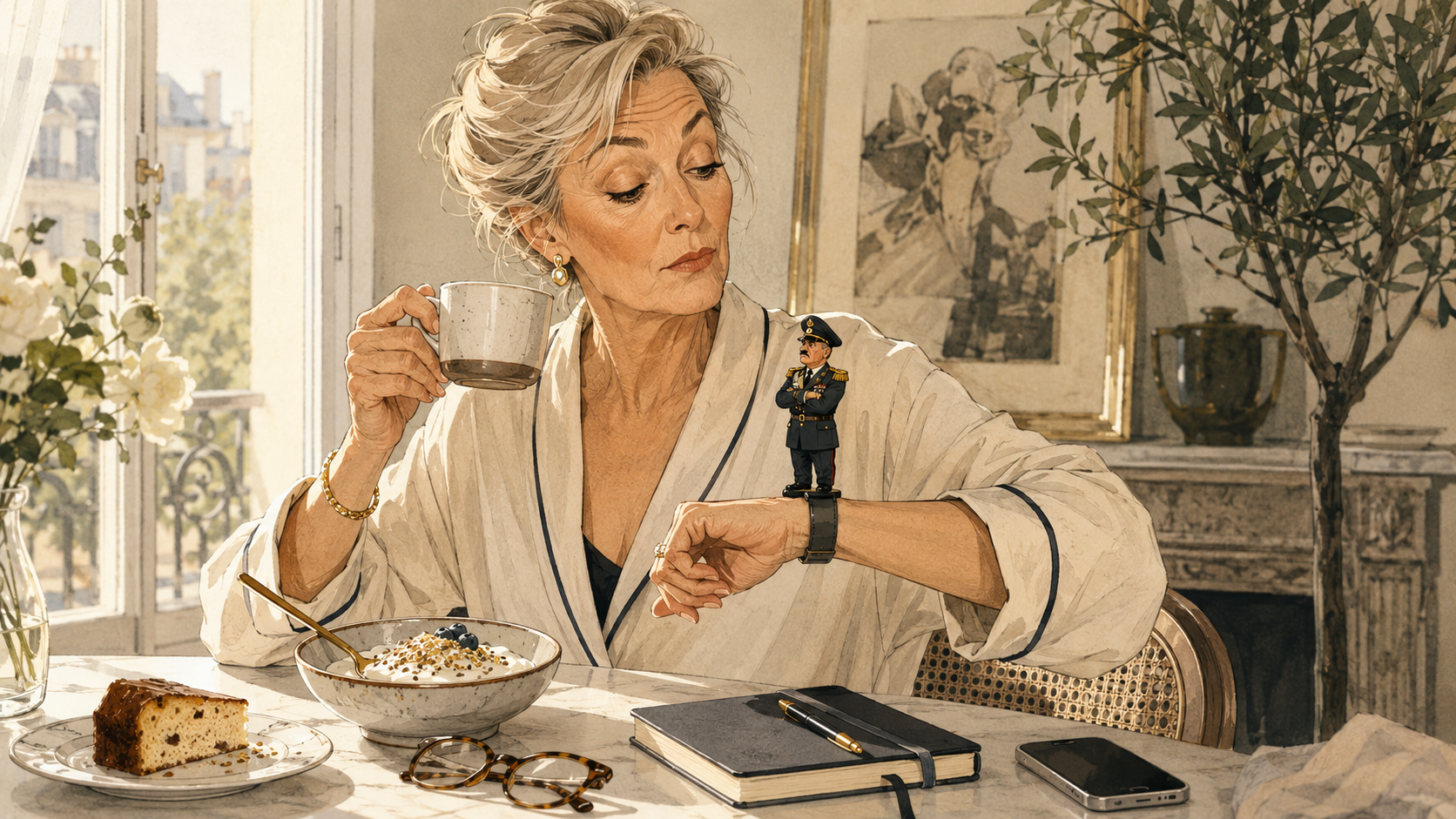
This morning, before I had properly felt the day, I checked how well I had slept.
Not whether I felt alive. Not whether the light was beautiful. Not whether I wanted coffee.
A number told me…
Apparently, I had slept quite well. This was surprising, because the moment I saw the number, I immediately felt slightly tired.
This is the strange world we live in now. We wake up and consult a device to find out whether we are allowed to feel alive. I know I am not the only one.
Some women check their sleep score. Some check their weight. Some check their skin in brutal bathroom light. Some check whether they have walked enough, eaten enough protein, drunk too little water, drunk too much wine, stretched enough, recovered enough, aged too visibly, rested too long, tried too little.
We are very advanced now. We no longer need anyone else to supervise us. We carry the supervisor on our wrist.
The weather in the room
And yet, my habit of optimisation did not begin with technology. It began much earlier.
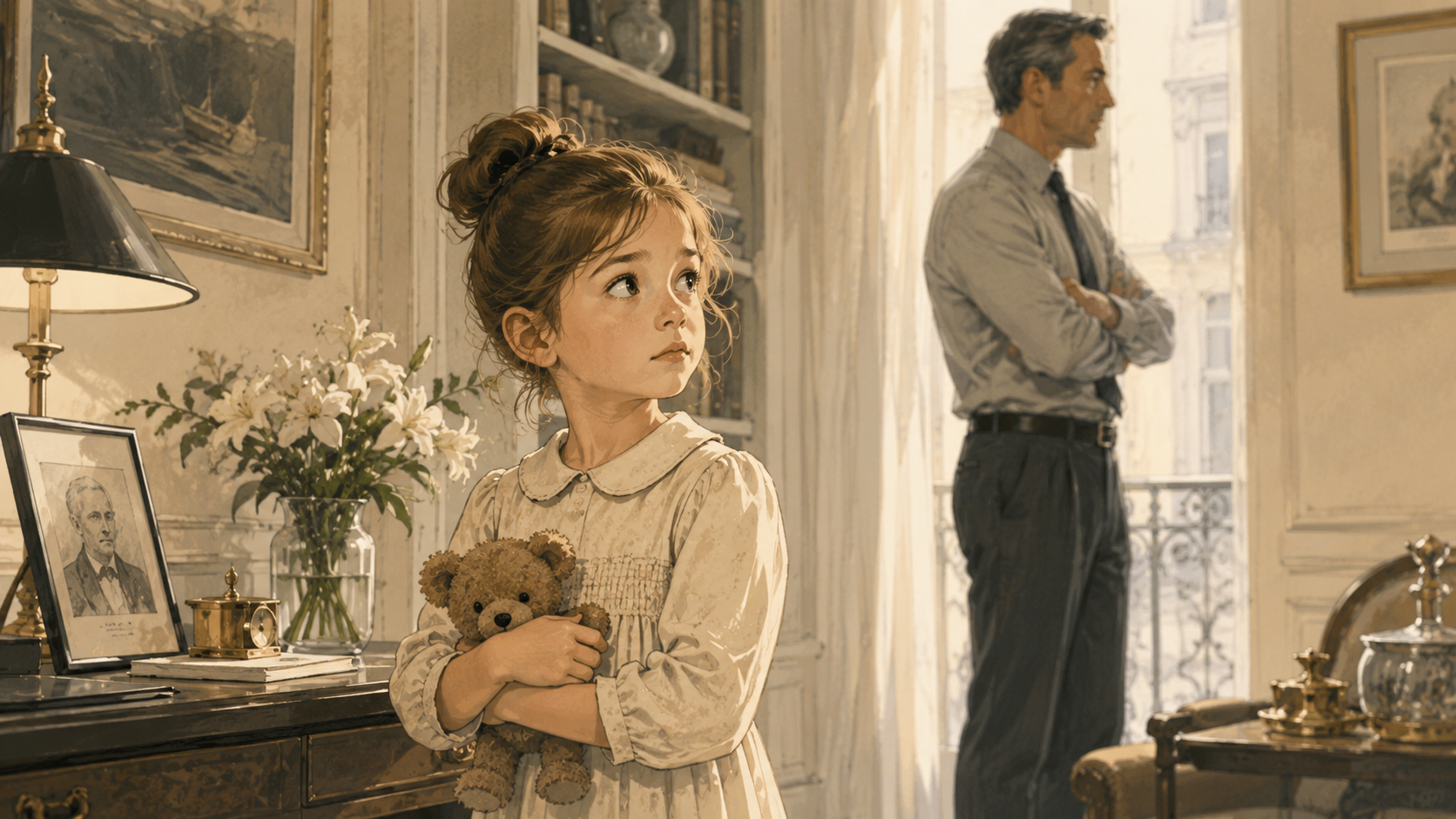
I think my father wanted a son. He never said it like that. But children understand the weather in a room long before they understand the words.
So I was raised with a certain Spartan tenderness. There was love, yes. But there was also discipline. A lot of discipline.
Be strong. Try harder. Don't complain. Don't be lazy. Don't be weak. Do better.
It was probably my father’s way of preparing me for life. He believed life would not be soft, so I should not become too soft either.
And I listened. Of course I listened.

Better than your best
As a young woman, I almost fell in love with the idea of pushing limits.
Not the modern kind, with collagen powders, recovery apps, magnesium sprays, and watches asking whether you are “ready” for the day in the tone of a disappointed personal trainer.
No. Mine was an older, harder, slightly more dramatic version. Very Soviet. Very heroic. Very unsuitable for a relaxed nervous system.
I once read a book by a Russian spy. I don’t remember every detail, but I remember the principle very clearly: Live on the margins.
Do not simply repeat what you did yesterday. Add a little more. If you did twenty squats today, do twenty-one tomorrow. Then twenty-two. Then twenty-three.
The important squat was not the first one. Not the tenth. Not even the twentieth. The important one was the last squat. The one where your legs burned. The one where you wanted to stop. The one where you almost screamed. That was the squat that made you grow.
I was young. I believed it entirely.
It became my mantra. Not only for squats, but for life. One more effort. One more page. One more task. One more responsibility. One more version of myself, better than the last.
There was something almost beautiful about it. A promise that if you could endure just a little more than yesterday, you would become someone stronger tomorrow.
Then came my first serious job.
I worked as Area Sales Manager at ECCO. The founder - an old, charismatic man with a presence that made you stand up straighter just by being in the room - once told me he saw potential in me. He wanted to see me grow.
I was proud. I stood there with all my young ambition and said: "Yes. I do my best."
He looked at me and replied: "That is not enough. You have to do better than this."
From then on, “doing my best” sounded a little weak. Almost lazy. Almost embarrassing.
So I learned to do better than my best.
When optimisation becomes survival
For years, optimisation became my private engine. I optimised my work, my time, my energy, my performance, my language, my appearance, my plans, my future. I didn't call it optimisation then.
I called it being responsible.
Later, when I had children, a demanding job, evening studies, and then became a single mother in a foreign country. Optimisation was no longer an ambition. It became survival.
There was no philosophy in it anymore. No Russian spy glamour. No charismatic founder talking about potential. There was laundry. Deadlines. Children who needed safety. Bills. Homework. Loneliness. And no backup plan.
So I became efficient. I had to.
Optimisation helped me survive. It helped me build a life, raise children, work, study, recover, and continue. It helped me stand up again and again when sitting down would have been so much more natural.
It was not my enemy. It was my armor. But armor has a problem. It protects you so well that one day you forget you are still wearing it.
The silent house
Much later, when the children were grown and had their own lives, something strange happened.
Life became quieter. Fewer practical emergencies. Fewer lunch boxes, school meetings, impossible calendars, small shoes in the hallway.
I thought this would feel like freedom. Instead, I met stress. The kind with no clear reason — which is somehow the worst kind.
My body, which had cooperated for years, began to object.
My mind, which had solved, planned, carried, repaired, translated, remembered, organized, and smiled on demand, suddenly became tired of being useful.
And I was forced to look at my life again.
Why do I optimise everything? Who am I when I am not improving? What happens if I do not add one more squat? What happens if I simply do twenty? Or ten? Or none at all?
These sound like small questions. They are not.
For a person who has lived on the margins, the middle can feel almost immoral. Rest can feel like decline. Acceptance can feel like laziness. Pleasure can feel suspicious, like a trap.
So I began learning something very difficult. Not how to do more. How to stop. Or at least, how to pause without immediately feeling guilty about it.
Captured by Greek yoghurt
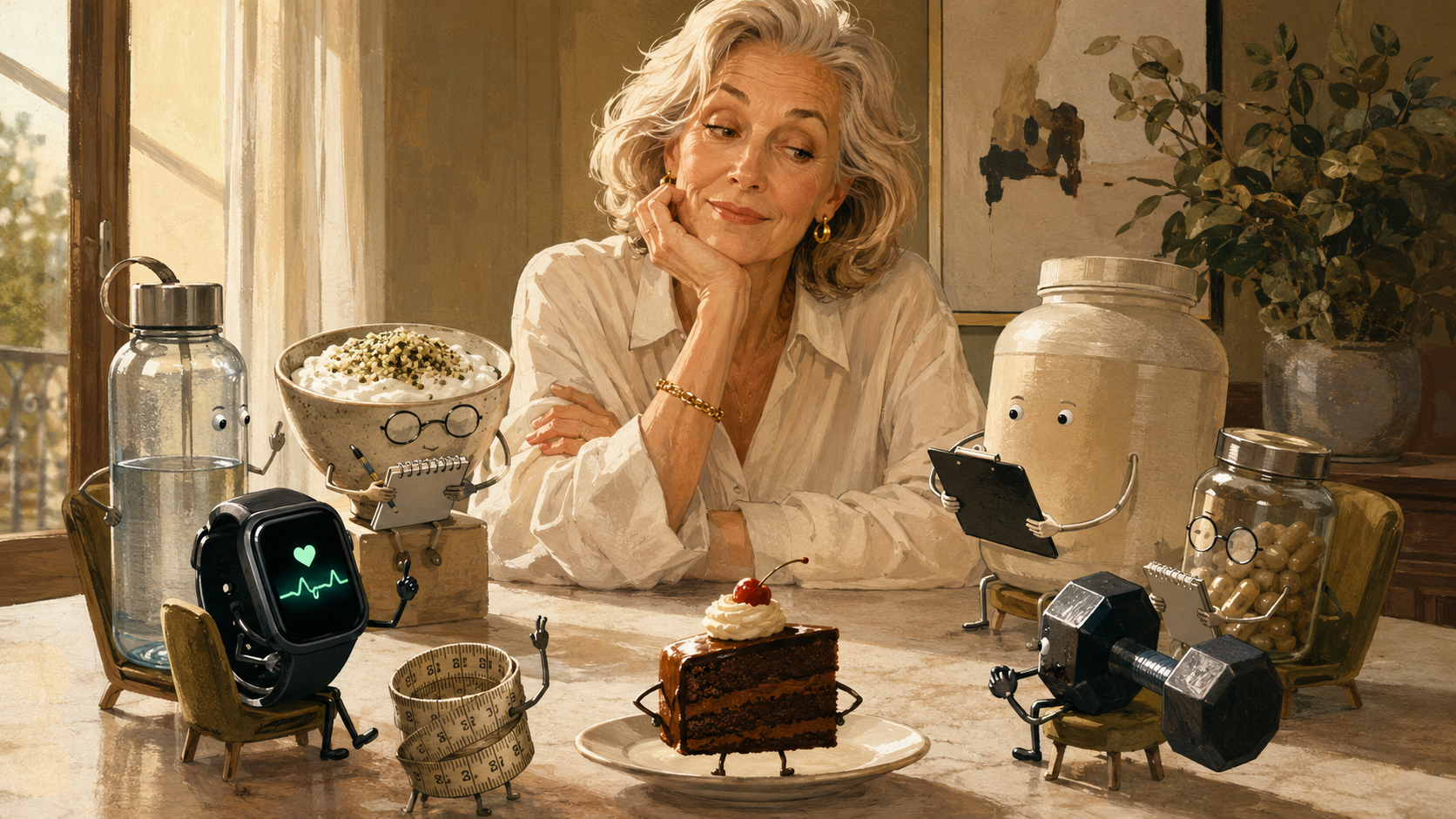
But then life, with its excellent comic timing, offered me a new field of optimisation.
Health.
Suddenly I was counting protein. Measuring sleep quality. Thinking about VO2 max, muscle mass, metabolism, waist measurements, recovery, supplements, inflammation, longevity, biological age, alcohol units, training zones, and whether my Greek yoghurt had enough hemp seeds to justify its existence.
In other words:
I had finally escaped the Russian spy, my father’s discipline, corporate ambition, and single-mother survival mode — only to be captured by a fitness watch and a bowl of yoghurt.
Progress.
And of course, I do want to be healthy. I want to stay strong. I want to move freely. I want to travel, dance, hike, love, write, laugh, and remain curious for as long as possible.
I want years, yes. But more than that, I want life inside the years.
Still, I recognize the old voice.
Not enough. Do better. Add one more. Improve this. Measure that. Correct yourself.
The voice never left. It just changed clothes.
It used to wear my father's discipline. Then a Russian spy's philosophy. Then an ECCO founder's challenge. Then a single mother's survival plan.
Now it wears a fitness watch. Very modern. Very convincing.
Care or control?
This is where I am now.
Not against optimisation. Not free from it either. Somewhere in between. Still figuring it out.
Trying to understand the difference between care and control.
Care helps me choose the walk, the protein, the sleep, the training.
Control makes me feel guilty for the wine, the cake, the skipped workout, the late dinner.
Care expands life. Control narrows it.
Maybe that is the line.
Optimisation is healthy when it gives me more life: more strength, more freedom, more joy, more presence, more years in which I actually feel like myself.
It becomes dangerous when it takes life away. When every meal becomes a calculation. Every evening a test. Every body signal a warning. Every rest day a failure. Every version of myself just a draft that needs editing.
And perhaps this is especially tricky for women. Because we have already spent so much of our lives being measured.
Too loud. Too quiet. Too ambitious. Too soft. Too emotional. Too cold. Too young to know. Too old to matter. Too natural. Too artificial. Too much. Not enough.
Always somehow under review.
The last squat is not the whole life
I still like improvement. I still believe in effort.
There is a part of me that will probably always admire the last squat - the one that burns, the one that asks for courage, the one that proves we can do more than we thought.
But I no longer want to live as if only the painful last squat counts.
There are other moments too.
The breath. The walk. The laugh. The glass of wine with someone you love. The cake that was not part of the plan. The chocolate. The day you did not improve anything, but somehow became more yourself.
Perhaps doing my best was always enough.
Perhaps the real strength now is not always adding one more squat. Perhaps it is knowing when to stop.
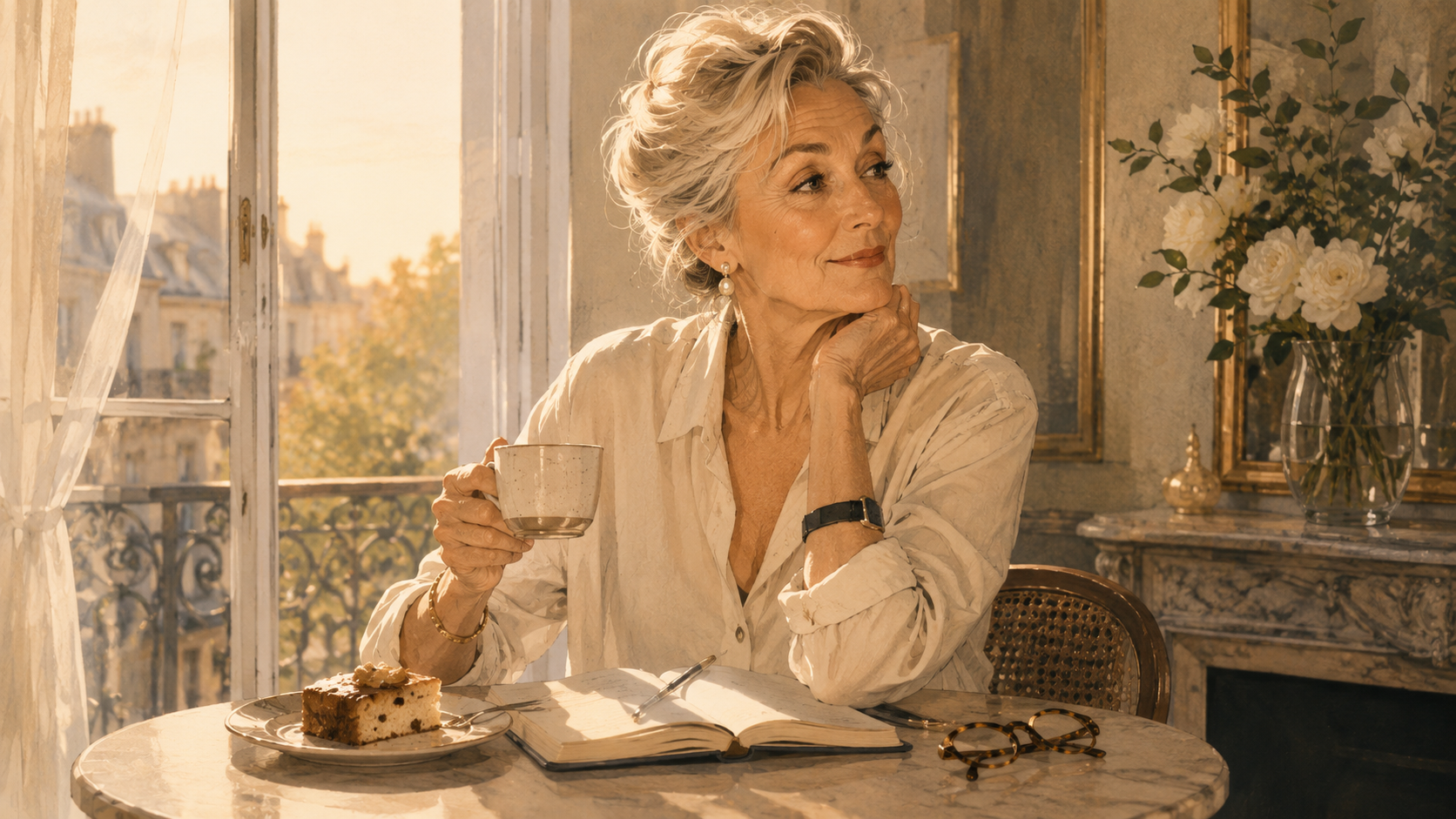
And perhaps, some mornings, before checking the number, I could ask a more dangerous question:
How do I feel?
What a revolutionary idea. Almost suspicious. Definitely not approved by the fitness watch.
What about you?
Do you recognize the supervisor on your wrist or wherever yours tends to show up?
And have you ever wondered what might happen if, just for one day, you stopped trying to become better and allowed yourself to be fully, inconveniently, beautifully alive?
More from Worlds Within
Worlds Within
Beautiful. Unfinished. You.
Write to me:
© 2026 Worlds Within. All rights reserved.