
Why do Japanese people have two religions? Shinto and Buddhism explained simply
While planning my trip to Japan, I fell into a rabbit hole.
I only wanted to understand one thing:
what is the difference between a Shinto shrine and a Buddhist temple?
That was all.
I did not want to embarrass myself. I did not want to clap in the wrong place or bow at the wrong gate.
But then one fact led to another.
And suddenly it was past midnight, and I was reading about red gates, sacred paths, sun goddesses, and one very strange fact:
In Japan, the number of religious affiliations is about twice the number of people.
How can that be?
Because many Japanese people are both Shinto and Buddhist at the same time.
At first, that sounds impossible.
Two religions? In one person?
But then it starts to make sense.
For a very long time, Japanese life has made room for both.
A baby may be blessed at a Shinto shrine.
A wedding may be Shinto too.
A funeral is often Buddhist.
Life gets one tradition.
Death gets another.
And somehow, nobody seems terribly stressed about it.
That may be what fascinated me most.
In Japan, many people do not feel they must choose one religion and throw the other away. Shinto and Buddhism do different jobs.
Shinto is closely tied to life, nature, purity, protection, and new beginnings.
Buddhism is more connected to death, memory, the afterlife, and reflection.
Instead of fighting for the same space, the two traditions have lived side by side for centuries.
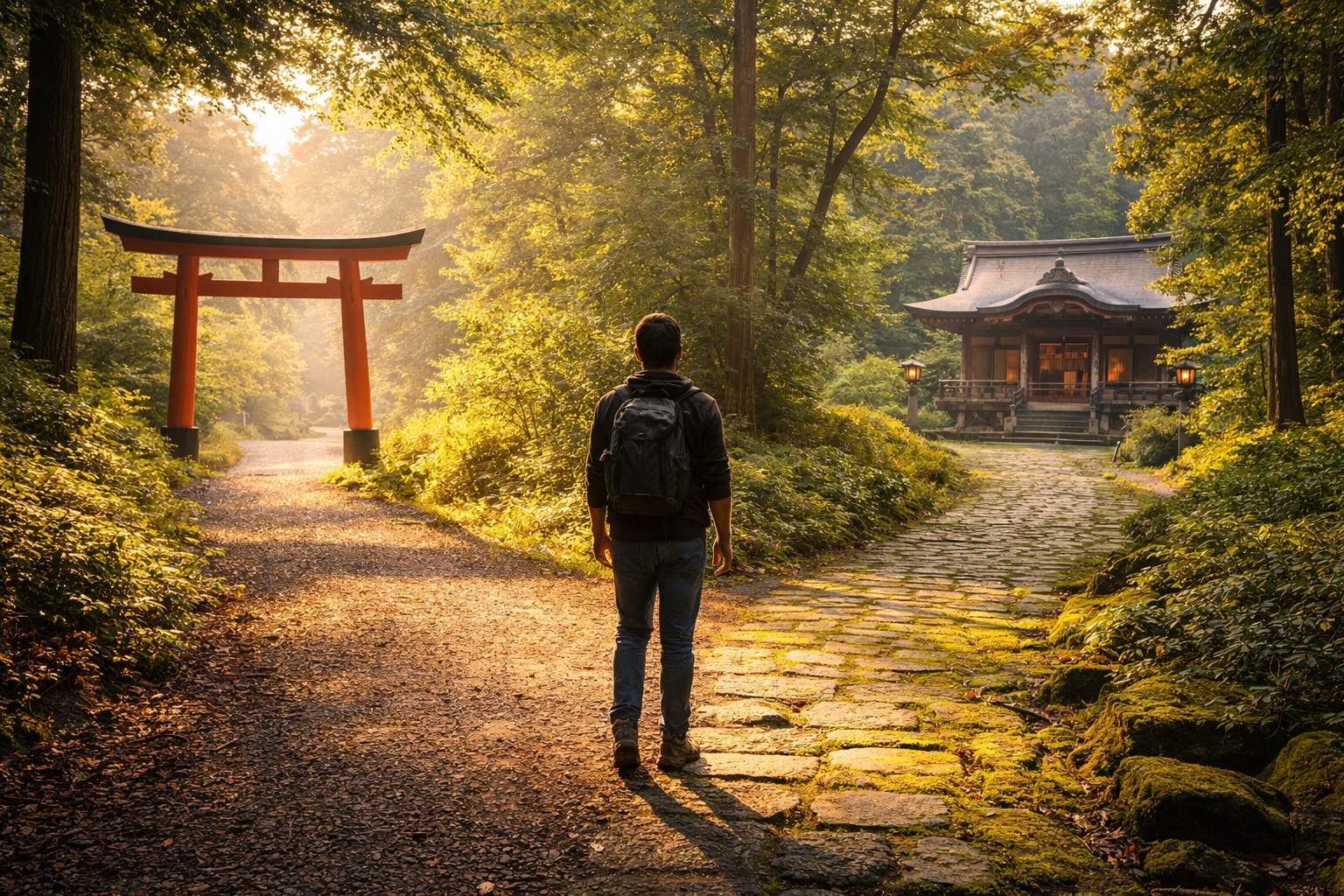
That big red Gate
You have seen it before.
A bright red gate in a forest, or at the entrance to a shrine, looking as if it knows a secret.
It is called a torii.
And it is not just a gate.
It is a sign.
It tells you: from here, things are different.
You are leaving the ordinary world behind.
You are stepping into a sacred one.
You are not just walking forward.
You are crossing over.
I love that idea.
People seem to need little moments like this. A door. A path. A gate. Something that tells the mind: slow down now. Look around. This place matters.
And then there is the name itself.
Torii is often linked to the Japanese words for bird and dwell - something like where birds dwell.
Which makes the old story even better.
Long ago, the sun goddess Amaterasu hid in a cave, and the world went dark.
The gods needed the light back.
So a sacred cockerel called out to her.
And she came out.
And the light returned.
Maybe that is why a torii feels like more than wood and paint.
It feels like a doorway between darkness and light.
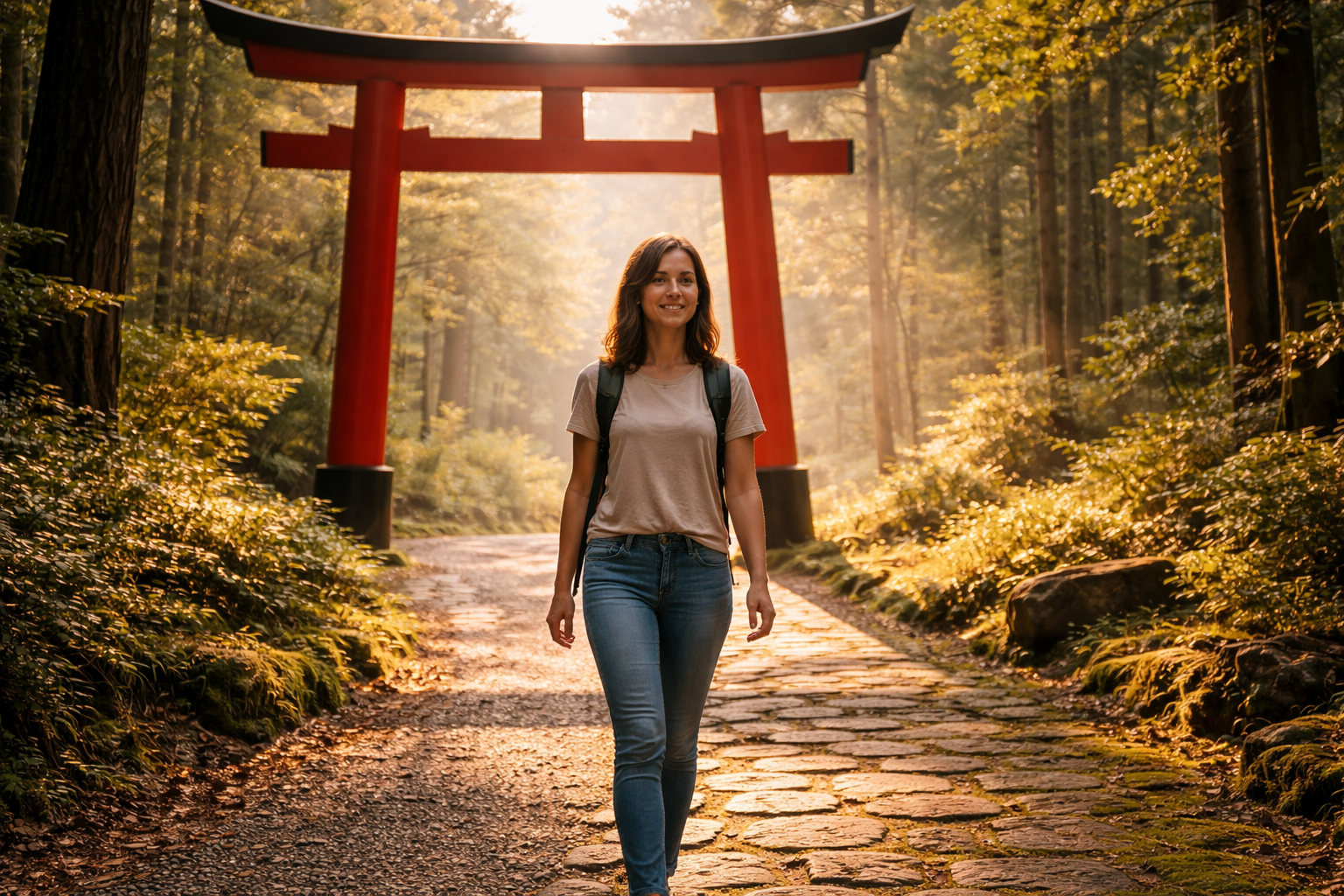
The path matters too
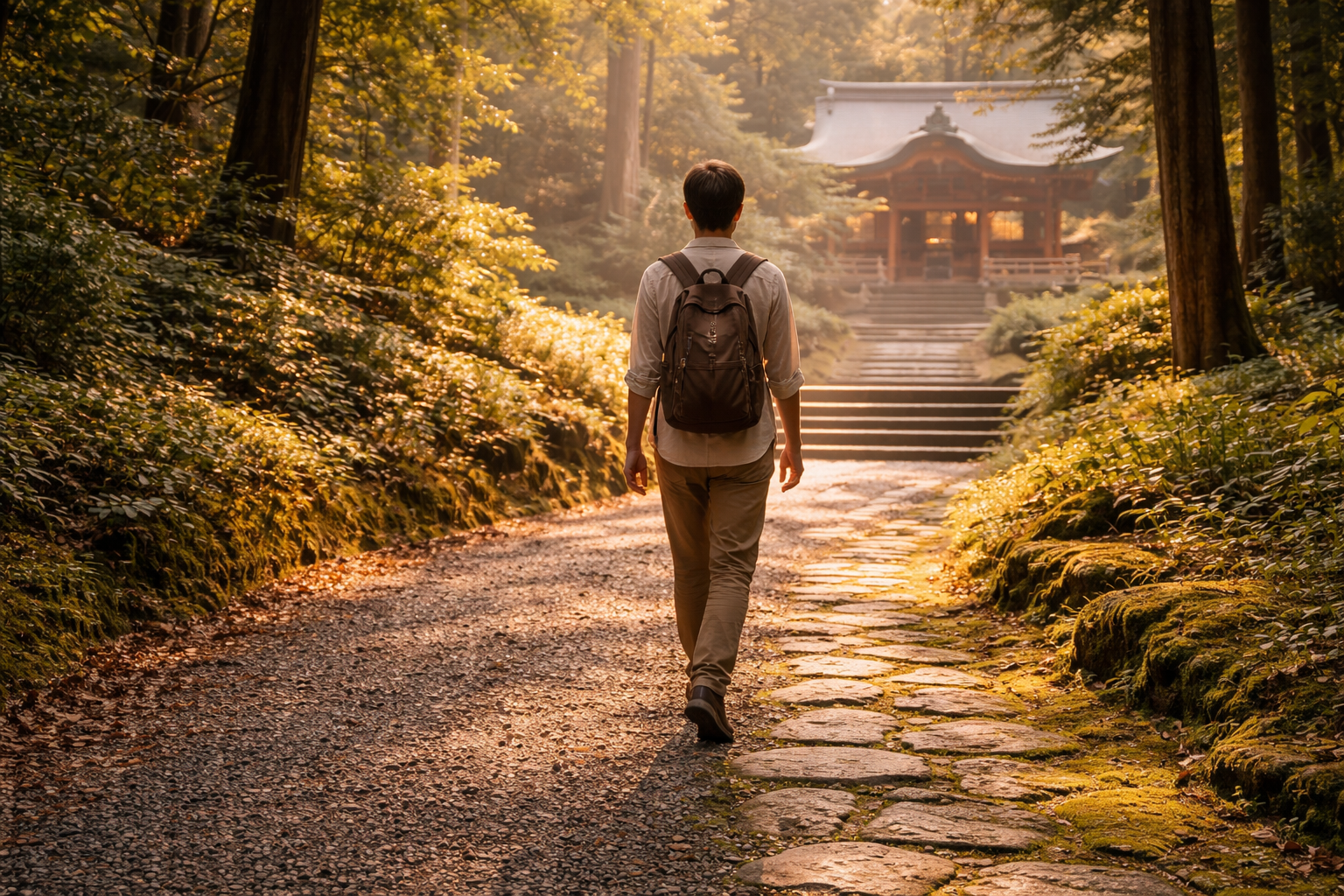
At a Shinto shrine, even the path is part of the experience.
The gravel crunches under your feet. It slows you down. It pulls you out of your rushing thoughts.
You cannot storm dramatically toward enlightenment at full speed while gravel is crunching under your shoes.
By the time you reach the shrine, your mind is a little quieter.
A Buddhist temple often feels different.
The paths may be stone, winding, mossy, and calm.
They do not crunch. They invite.
Two traditions. Two moods.
But both seem to say the same thing:
the journey to a sacred place should change you a little before you get there.
How to see the difference
Here is the easiest way to remember it:
watch what people do with their hands.
At a Shinto shrine, people often clap twice. It is a bit like knocking on a door, as if to say, “Hello, are the gods in?”
At a Buddhist temple, people usually press their hands together and bow in silence.
So here is the quick version:
Clapping = Shinto
Bowing = Buddhist
Purity, not punishment
This part really caught me.
Shinto does not focus much on sin.
It focuses on purity.
Not: Were you bad?
More like: Are you clear? Are you in harmony?
And purity here does not just mean soap and water.
It means being free from clutter, confusion, and disconnection.
A clean thing is easier to see.
A clean heart is easier to guide.
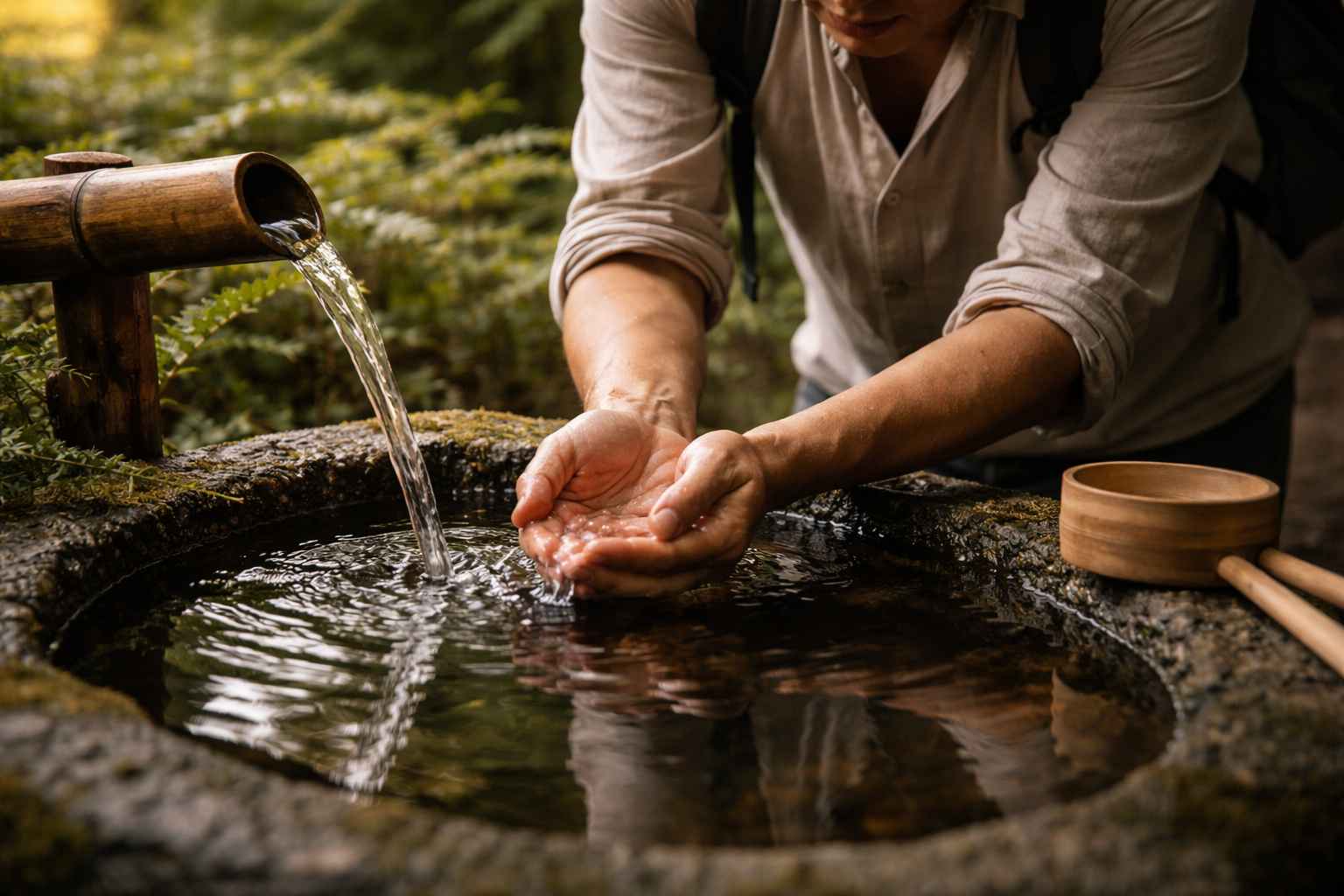
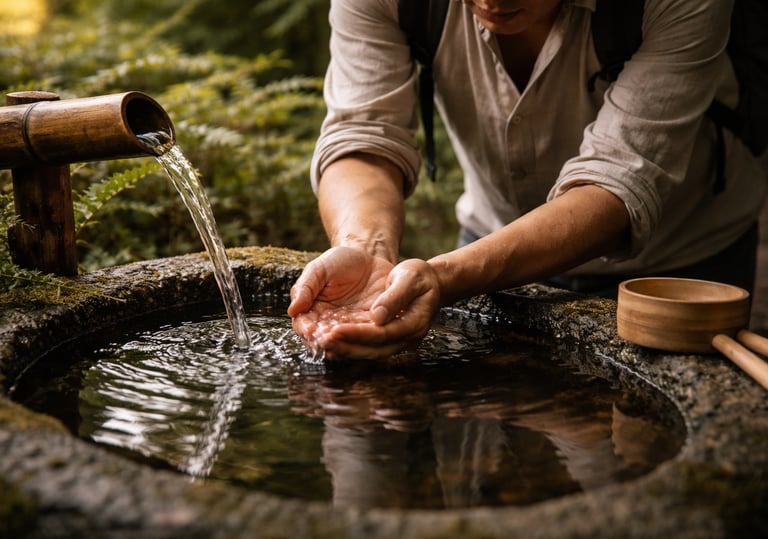
Before entering a shrine, people often wash their hands at a stone basin.
It is a small act, but it says something big:
You can begin again.
Water carries away what you do not need to drag in with you.
1.300 years of getting along
When Buddhism came to Japan in the 6th century, the two traditions did not compete.
They blended.
The Japanese decided that Shinto gods - the kami - were he best local protectors for Buddha.
Therefore shrines and temples were often built side by side.
Shinto and Buddhism shared space for more than 1.300 years.
Later, in 1868, the Meiji government formally separated them.
But even today, the blending is still everywhere.
Most Japanese people do not consciously choose between them.
They simply live with both.
What Shinto is
Shinto has no single founder.
No prophet.
No single holy book.
It grew slowly over time from Japan’s relationship with nature.
The word Shinto means “the way of the gods.”
These gods are called kami.
But kami are not just distant beings sitting on clouds.
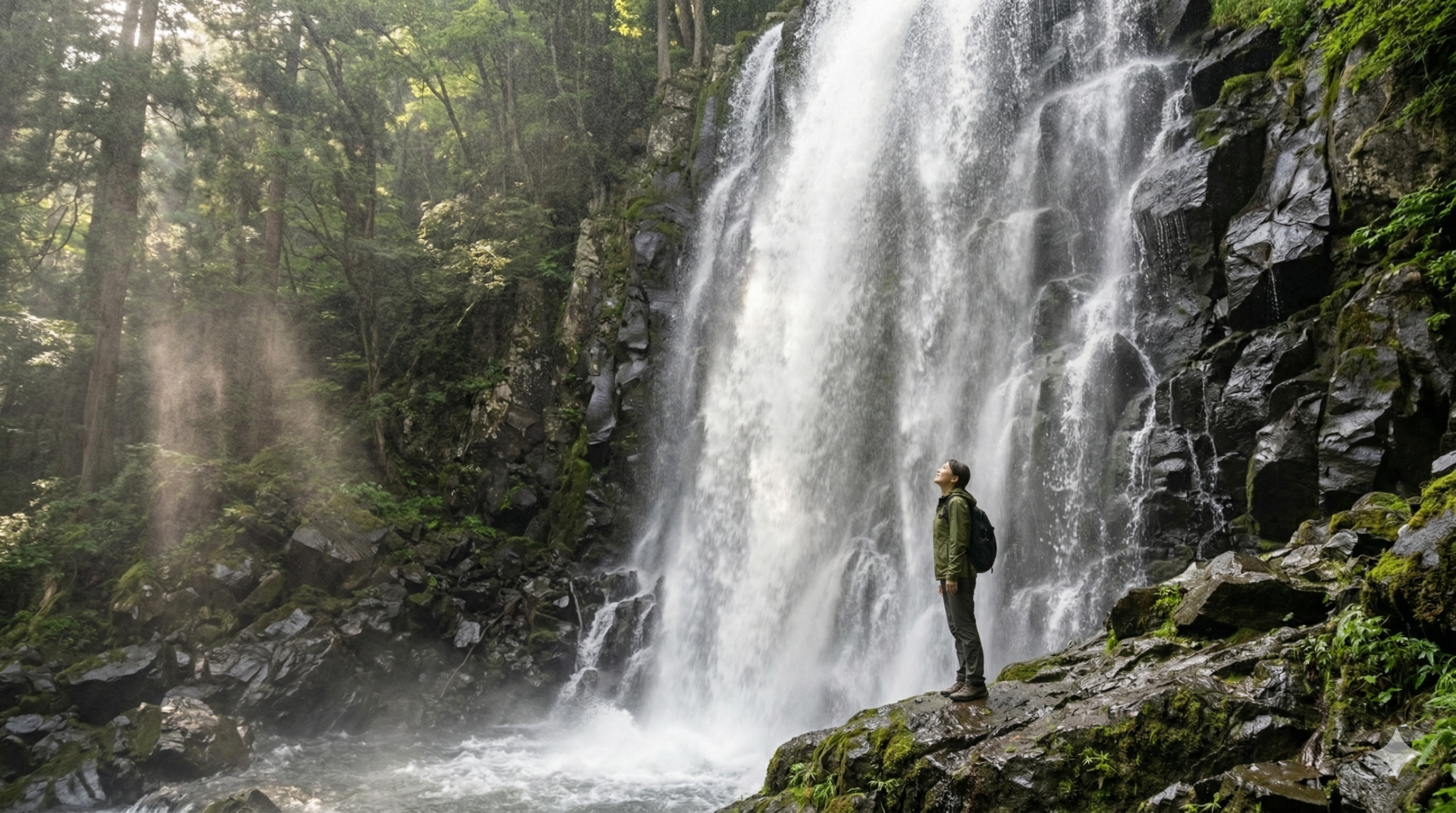
They can live in mountains, rivers, trees, wind, rocks, waterfalls, and places that feel full of mystery.
Anything in nature that fills people with wonder, beauty, or fear may be connected to kami.
Japan traditionally speaks of eight million kami, which is really a poetic way of saying: there are many, many more than you can count.
So Shinto feels less like a strict belief system and more like a way of noticing the world.
It teaches three simple habits:
Respect for nature - not as duty, but as a natural response to its beauty and power
Harmony with your surroundings - reading the moment, the room you are actually in
Gratitude toward ancestors - you are here because of those who came before you
I like that.
It feels less like a lecture and more like good manners for being alive.
A small beautiful example
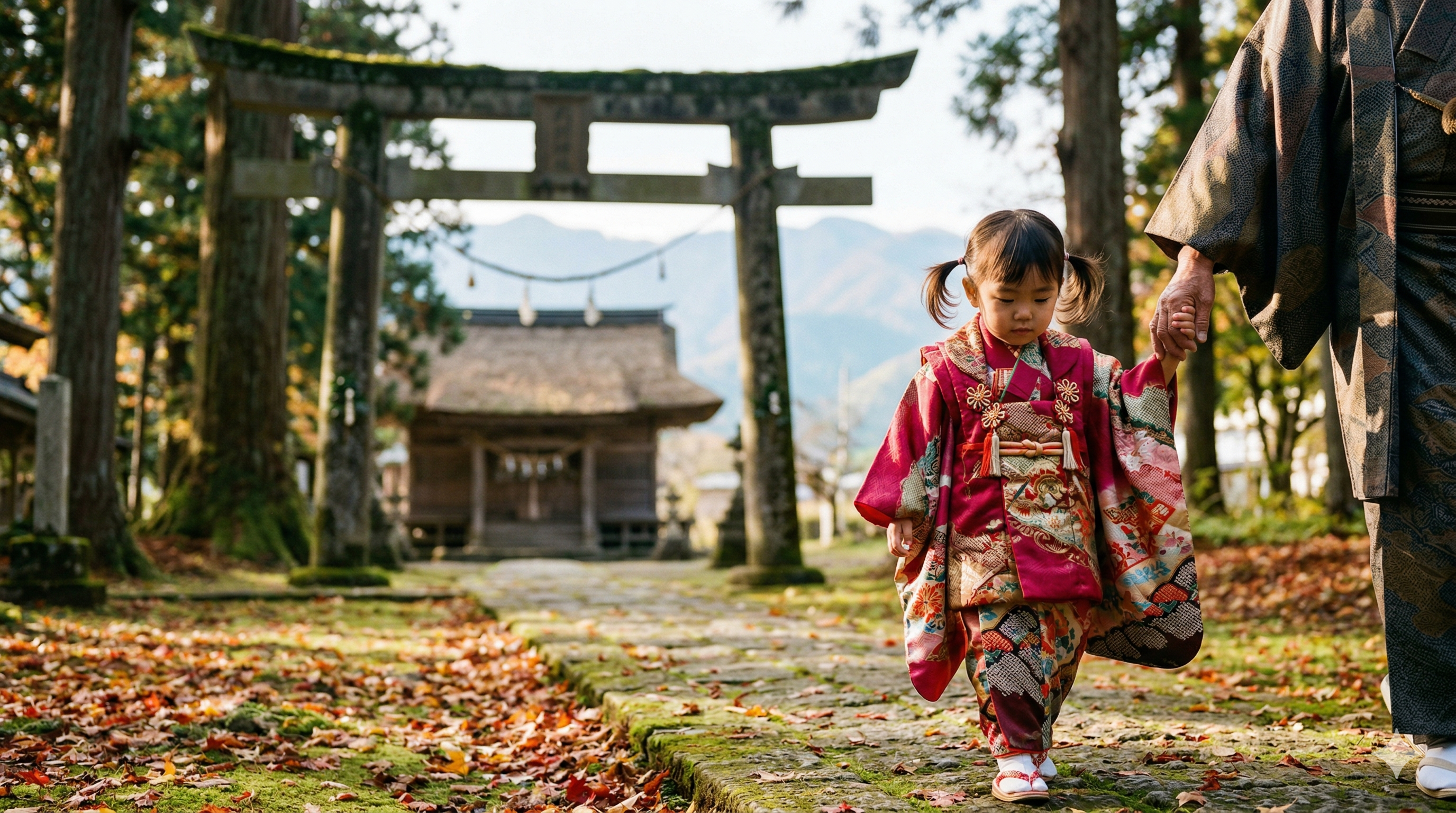
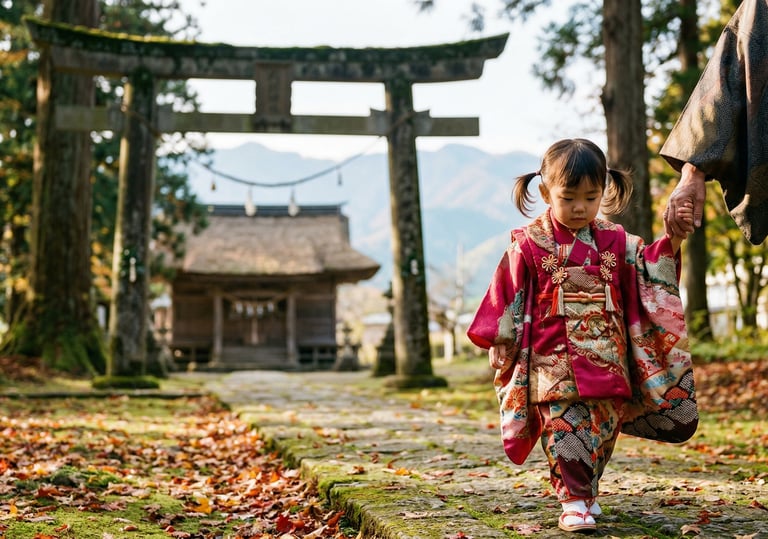
There is a festival called Shichi-Go-San.
It means 7-5-3.
On November 15, children who are three, five, or seven years old are dressed in kimono and brought to Shinto shrines for blessing.
Those ages were once seen as special and delicate, times when children needed extra care and protection.
I love that image: small children in bright silk, standing before a shrine, as if the whole world were wishing them well.
And that, to me, says something important about Shinto.
It looks at life with wonder and respect.
It looks at nature the same way.
Not as something cute and harmless, but as something beautiful, powerful, and mysterious.
A mountain is beautiful.
A mountain is also dangerous.
You love it anyway.
Maybe you love it even more because of that.
So why do Japanese people have two religions?
Because the two traditions do different things.
Shinto helps hold life, nature, purity, and beginnings.
Buddhism helps hold death, memory, endings, and reflection.
In Japan, religion is often less about choosing one label forever and more about using different traditions for different parts of life.
And maybe that is why it works.
Not as a contradiction.
Not as a compromise.
Just… space for more than one truth.
More from Worlds Within
Worlds Within
Beautiful. Unfinished. You.
Write to me:
© 2026 Worlds Within. All rights reserved.